What I Learned When I Realized My Degree Wouldn’t Take Me Anywhere (Every Undergraduate Must Read)
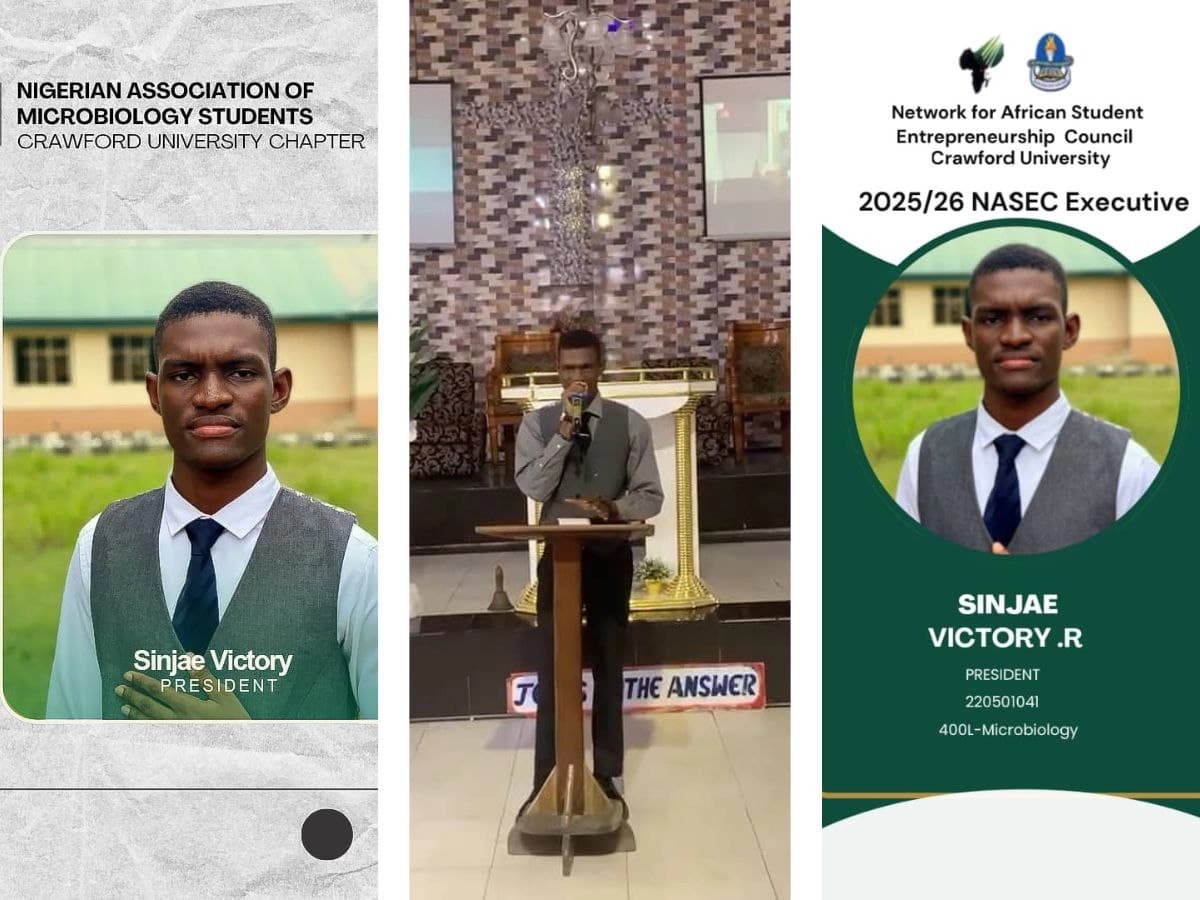
Many students enter university believing that good grades alone will secure their future. But real-world success often requires more than a certificate. This story reflects on how curiosity, skills, networking, and a little audacity can transform a student’s university experience into a foundation for real opportunities.
Your Degree Is Not Your Only Asset
When I first came to Crawford, my plan was tidy and simple: get good grades, graduate, and find a job.
That was the version of success I had been taught, and like most of us, I followed it without asking many questions. I was determined, dutiful, and a little naive.
Then my first semester results arrived.
Not a fail, but not what I expected either.
I remember that pit-of-the-stomach feeling. The worry. The questions. The quiet realization that grades alone might not be the safety net I thought they were.
Around the same time, my food money would run out halfway through the month. I wasn’t just stressed about marks. I was broke, anxious, and questioning the whole system. What was the point of all this effort if it didn’t translate into a life I could actually afford?
That season forced me to ask a difficult question:
What if the certificate isn’t enough?
What if I left campus with a degree and no other advantage?
That was the moment something shifted.
If I wanted different outcomes, I needed different habits.
The Messy Lab of Trying Things
I started small.
At first, I created a group where we discussed history and current affairs. I’ve always enjoyed sharing knowledge about culture, history, and the world around us, and I wanted others to care about those conversations too.
The group lasted for two semesters.
But eventually I lost momentum. It stopped generating value for me, and it wasn’t sustainable.
That realization was uncomfortable but important.
Passion alone wasn’t enough. I wanted impact, but I also needed something that could support my growth and survival.
So I began experimenting.
- Small businesses
- Student projects
- Side hustles
- Community initiatives
None of them became instant success stories.
But they weren’t wasted.
Every attempt taught me something practical:
- how to start an idea
- how to organize people
- how to test whether something actually matters
- how to keep a project alive long enough to learn from it
Failure, it turns out, is a very effective teacher.
Learning Fast and Learning Broadly
Before entering 200 level, I made a deliberate decision.
Instead of guessing my way through university, I would start learning intentionally.
I explored everything I could get my hands on:
- Digital marketing
- Coding
- Freelancing
- Product thinking
- Social media systems
- Data literacy
- Basic AI
- Graphic design
I didn’t wait to discover my “one true passion.”
Instead, I focused on exposure and competence.
Sampling different skills gave me perspective. It showed me where I could contribute value and where opportunities existed.
That choice — to be a generalist first and a specialist later — changed everything.
Skills created alternatives.
They created confidence.
And they created the realization that many students simply did not have access to this information.
That realization eventually led to something bigger.
The Idea Behind CRU-HUB
CRU-HUB didn’t start as a grand vision.
It grew out of curiosity, conversations, and one simple observation:
Crawford students have limited access to skills and real opportunities.
So the goal became clear.
Build a bridge.
CRU-HUB began as a platform for sharing:
- courses
- job opportunities
- internships
- skill resources
- practical information students rarely hear about inside classrooms
The mission was simple.
Help students leave campus richer in skills, awareness, and opportunities than when they arrived.
The Student Who Asks Questions Wins
One lesson I wish I understood earlier is this:
Curiosity is a competitive advantage.
The student who asks questions — not to show off, but to genuinely understand — always gets further.
They find mentors.
They gain clarity.
They uncover shortcuts that others never notice.
Questions break the silence that most people accept.
Questions expose gaps in systems.
Questions connect you to people who can change your trajectory.
Asking questions is how I met people who taught me the skills I needed.
It is also how CRU-HUB helped its first two students land paying jobs.
Questions are not weakness.
They are tools.
A Little Audacity Goes a Long Way
Another quality matters just as much as curiosity.
Audacity.
Not reckless arrogance.
Not empty bravado.
Just the courage to start before everything feels perfect.
Many of the most useful student initiatives started as small, imperfect ideas.
They were built by people willing to look inexperienced while learning.
Audacity looks like:
- submitting the first draft
- launching the first project
- emailing the recruiter
- applying even when your résumé feels incomplete
Audacity converts “one day” into day one.
When you combine audacity with humility — the willingness to learn from mistakes — you create a powerful engine for growth.
Practical Moves for Students
If I could speak directly to my fresher self, these are the principles I would emphasize.
1. Learn Broadly Before Choosing
You do not need to lock your entire career at 18 or 19.
Explore different fields. Sampling creates options.
2. Build a Simple Portfolio
Even small projects prove capability.
A completed project carries more weight than months of saying “I’ll start soon.”
3. Network With Intention
Do not collect contacts like trophies.
Build relationships that are mutual and meaningful.
Offer value. Help people. Follow up.
4. Ask Questions Often
Curiosity accelerates learning.
Ask seniors.
Ask lecturers.
Ask professionals doing work you respect.
5. Be Audacious — Responsibly
Start small.
Ship quickly.
Improve continuously.
Fail quietly, but learn loudly.
6. Use Your Time Wisely
University passes quickly.
Treat personal development with the same seriousness as academic schedules.
7. Help Other Students
Teaching someone else reinforces your own understanding.
Growth compounds when knowledge is shared.
8. Protect Your Integrity
Success built on compromised ethics eventually collapses.
Build systems and revenue paths that scale honestly.
The Early Wins That Proved the Idea
When CRU-HUB started, the first signs of impact were small but meaningful.
- Helping two students secure paid jobs
- Helping students improve résumés that actually received responses
- Sponsoring a small campus event
These wins might appear minor, but they validated something important.
Access and information change outcomes.
Those early results gave the momentum needed to keep building.
More Than a Degree
A degree opens doors.
But it is not the door itself.
Skills, networks, character, curiosity, and audacity are the assets that allow you to walk through doors — and sometimes build entirely new ones.
If you invest in those assets during university, you graduate with more than a certificate.
You graduate with options.
So do not wait until graduation to become the person you want to be.
Start messy.
Ask questions.
Learn relentlessly.
Be a little audacious.
Your degree matters.
Just remember that it is only one part of the larger portfolio you are building while you are here.
About CRU-HUB
Bridging Students With Real Opportunities
CRU-HUB was founded by a Crawford University student driven by curiosity, learning, and impact.
After noticing the gap between students and real-world opportunities, the platform was built to bridge it — helping students:
- gain practical skills
- discover career opportunities
- access jobs and internships
- grow beyond the traditional university experience
The vision is simple.
Help students graduate with skills, access, and confidence, not just a certificate.
Please sign in to show some love 💙
Share this article
Comments (0)
No comments yet
Be the first to share your thoughts on this post!